Transitioning From Biomedical Waste Transportation to Processing
Biomedical waste transportation has long been a cornerstone of the healthcare waste industry. For many transporters, hauling waste provides steady revenue, but rising compliance costs and increasing reliance on third-party processors leave transporters with less control over pricing and profit.
More haulers are exploring new ways to capture volume, and localized waste processing is emerging as a smart path forward. By managing treatment on-site, companies gain stronger control over operations, reduce dependency on external processors, and improve profitability.
Clean Waste Systems (CWS) helps transporters shift from hauling to processing by giving them the tools, training, and support needed to enter this new segment without unnecessary complexity.
Table of Contents
Why Consider the Shift from Hauling to Processing?
Biomedical waste transportation has become less predictable as a long-term growth strategy. Disposal fees, fuel costs, and labor expenses rise every year, and transporters who rely solely on moving waste face pressure from multiple angles, limiting their ability to plan for the future.
Processing creates a new revenue stream. By treating waste in-house or locally, transporters can retain the value they currently hand off to third-party processors. This strengthens profitability and provides more control over scheduling, compliance, and operational efficiency.
Additionally, healthcare facilities are under pressure to reduce their environmental impact and are looking for vendors that support their goals. Transporters who add processing to their services can meet this demand with cleaner, greener solutions.
At the same time, waste generators want fewer vendors and more transparency in how their waste is handled. By integrating processing, transporters become a one-stop solution. Hospitals and clinics can see exactly where and how their waste is treated, track volumes, and receive detailed reporting on compliance and sustainability practices.
What Challenges Do Transporters Face When They Rely Only on Hauling?
For many biomedical waste transportation companies, sticking to hauling alone is becoming increasingly challenging. Shrinking margins are often the result of two key factors: rising disposal fees and reliance on processor schedules.
When processors control drop-off times and treatment costs, transporters have little room to adjust pricing or improve profitability. Long transport routes increase fuel use and labor hours, while facility restrictions prevent route optimization.
Compliance adds another layer of complexity. Strict state and federal regulations demand detailed documentation, training, and safety protocols. When processing is outsourced, transporters have limited ability to ensure compliance on their own, which increases administrative burdens and potential risk.
Relying exclusively on hauling ties revenue to volume rather than service value. This makes long-term growth difficult and leaves little flexibility to respond to market changes or expand into higher-value services.
Drawbacks of Staying in Hauling:
- Financial: Rising disposal fees, fuel, and labor costs shrink profit margins.
- Operational: Long transport routes and limited facility flexibility reduce efficiency.
- Compliance: Outsourcing processing increases administrative work and limits control.
- Scalability:
Revenue depends entirely on volume, limiting long-term growth.
How Clean Waste Systems Supports the Transition to Processing
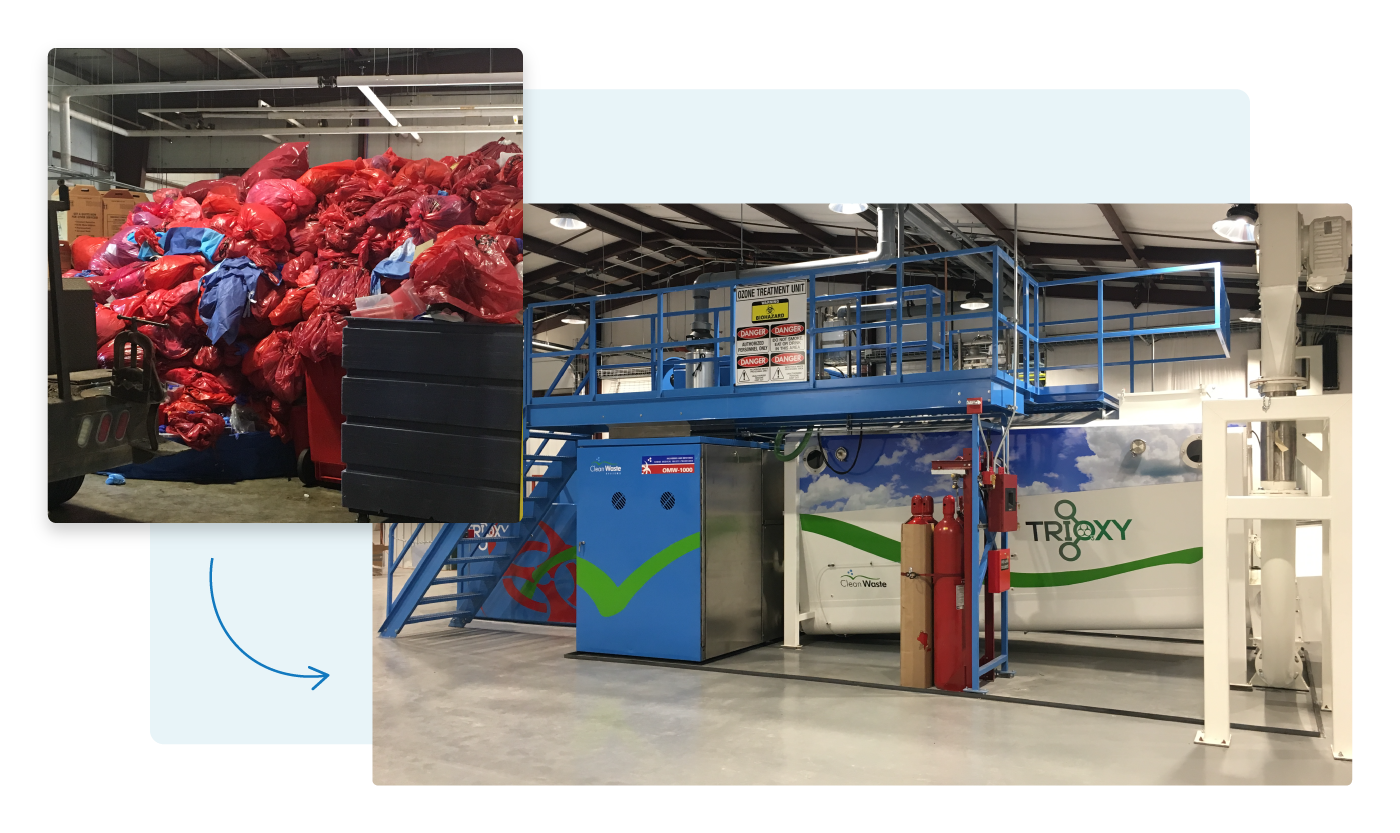
Clean Waste Systems makes the shift from biomedical waste transportation to processing practical and manageable with equipment that utilizes ozone sterilization technology. The CWS systems are compact and designed to fit into small facility footprints. Transporters without large processing spaces can integrate these units without major renovations.
Unlike traditional methods that emit heat or toxic fumes, ozone treatment is odorless, fumeless, and heat-free. Because CWS systems use non-incineration treatment, they offer a clear advantage in compliance and it becomes easier for processors to obtain the necessary permits and adhere to local, state, and federal regulations.
CWS provides onboarding, hands-on training, and ongoing support so transporters can integrate processing into their business without needing specialized in-house expertise.
Transition from Transporter to Processor with Clean Waste Systems
Relying on biomedical waste transportation alone limits both revenue and long-term scalability. By adding processing, transporters gain control over operations, capture more value, and open new revenue streams.
Clean Waste Systems removes common barriers to entering waste processing by providing compact, ozone-based equipment that fits small facilities, simplifies compliance, and reduces operational complexity. Combined with hands-on onboarding, training, and ongoing support, CWS gives transporters a clear, manageable path to profitable processing.
Frequently Asked Questions
What does it take to operate a processing system?
Operating a Clean Waste Systems processing unit is straightforward. The system uses automated ozone sterilization, minimizing hands-on handling. CWS provides full training, standard operating procedures, and ongoing support, so transporters don’t need specialized in-house expertise to run it safely and efficiently.
How long is the transition from hauling to processing?
The transition timeline depends on facility setup and training, but many transporters can begin processing with CWS in just a few months.
Do small transporters benefit from processing?
Yes. CWS equipment is compact, making it ideal for transporters with smaller facilities. By adding processing, small operators can capture more value, gain operational control, and differentiate themselves in the market.